

Table of Contents
What You’ll Learn
Here’s what this guide reveals about artificial intelligence in radiology practice:- 96.6% diagnostic accuracy in breast cancer detection, exceeding mammography
- 17% faster reading time while handling larger caseloads
- 87 minutes to urgent diagnosis vs. 7,714 in routine workflow
- 35-50% radiation dose reduction without sacrificing image quality
- 63+ hours saved annually, equivalent to 12 radiologist shifts
- 69% fewer false positives across imaging modalities
- 82.4% of professionals confirm AI’s substantial role in practice
- Real-world case studies proving AI impact across multiple clinical applications
What is AI in Radiology?
AI in radiology refers to the application of Artificial Intelligence technologies, such as machine learning and deep learning, to interpret and analyze medical images and automate workflows. This helps radiologists perform their tasks faster and more accurately.AI Use Cases in Radiology
- Image analysis: AI algorithms can be used to analyze X-rays, MRIs, and CT scans to identify and highlight potential issues like tumors, fractures, or anomalies. This speeds up the diagnostic process and ensures early detection.
- Predictive analytics: AI can predict patient outcomes based on historical data, aiding in treatment planning and resource allocation.
- Workflow optimization: Automation of administrative tasks (like sorting and filing images) with the help of radiology information systems can help improve the efficiency of radiology departments.
- Quality control: AI helps maintain image quality by flagging images that may need to be retaken, reducing radiation exposure for patients.
What is AI Radiology Software
Radiology AI software is a specialized class of applications that uses Artificial Intelligence to help radiologists analyze and interpret medical images and optimize their workflows. These software solutions are designed to improve the accuracy and efficiency of diagnosing conditions and abnormalities in medical imaging data. Medical imaging AI software developers play a key role in creating these advanced solutions, designing tools that align with the specific needs of healthcare professionals and institutions. AI radiology software employs advanced machine learning algorithms to detect and highlight potential areas of concern within medical images. It helps radiologists by providing quick and reliable insights, ultimately leading to faster and more accurate diagnoses.Why Radiology Needs AI
Radiology specialists use medical imaging to diagnose and monitor diseases. They interpret these medical images (including X-rays, MRIs, CT scans, and ultrasounds) to unveil insights that are vital for patient health. Radiology faces critical operational challenges that impact patient care and clinician wellbeing. Understanding these pressures reveals why AI adoption is essential. Here are a few examples:- A large volume of medical image scans: The number of medical scans generated daily can be overwhelming, making it difficult for radiologists to keep pace with this influx.
- Complex diagnosis: The nuanced differences in images can make diagnosis hard and time-consuming. Even highly skilled radiologists are susceptible to human error, and the margin for error in this field can have profound consequences for patients.
- Slow process: Manual interpretations of medical images are inherently time-consuming. Radiologists must meticulously study each image, searching for the tiniest anomalies or signs of disease. This painstaking process can delay diagnoses and treatment plans, potentially impacting patient outcomes.
Benefits of AI in Radiology
Artificial Intelligence delivers measurable advantages across diagnostic accuracy, operational efficiency, and patient care. In fact, 82.4% of radiography professionals agree that AI plays a substantial role in practice today, enhancing everything from image acquisition to dose reduction. These benefits of AI in radiology span multiple clinical and operational dimensions:Increased Diagnostic Accuracy
Enhanced Image Quality and Clarity
Automated Abnormality Detection
Quantitative Measurement and Tracking
Rapid Diagnostic Support
Significant Time Savings
Operational Efficiency and Cost Savings
Critical Case Prioritization
Consistent Quality Assurance

Case Studies: Real-world AI Applications in Radiology
The integration of AI and radiology has resulted in remarkable advancements. Here, we explore a few instances where AI has made a substantial impact on radiological diagnoses.
AI-Powered Radiology Report Automation

Early Detection of Breast Cancer with AI

Improved Stroke Diagnosis and Treatment

AI in Chest X-rays: Pneumonia Detection

Enhancing Neuroimaging: Alzheimer’s Disease

Fracture Detection in Radiography
Challenges, Risks, and Ethical Considerations of AI in Radiology
While the integration of AI into radiology holds immense promise, it’s important to recognize and address the challenges and ethical considerations that accompany this technological revolution. Yet the cost of delayed adoption is equally significant. According to the Philips Future Health Index 2025, radiologists cite substantial risks when AI implementation lags:- increased clinician burnout (49%)
- missed early intervention opportunities (43%)
- growing patient backlogs (42%)
- decreased care quality (38%).
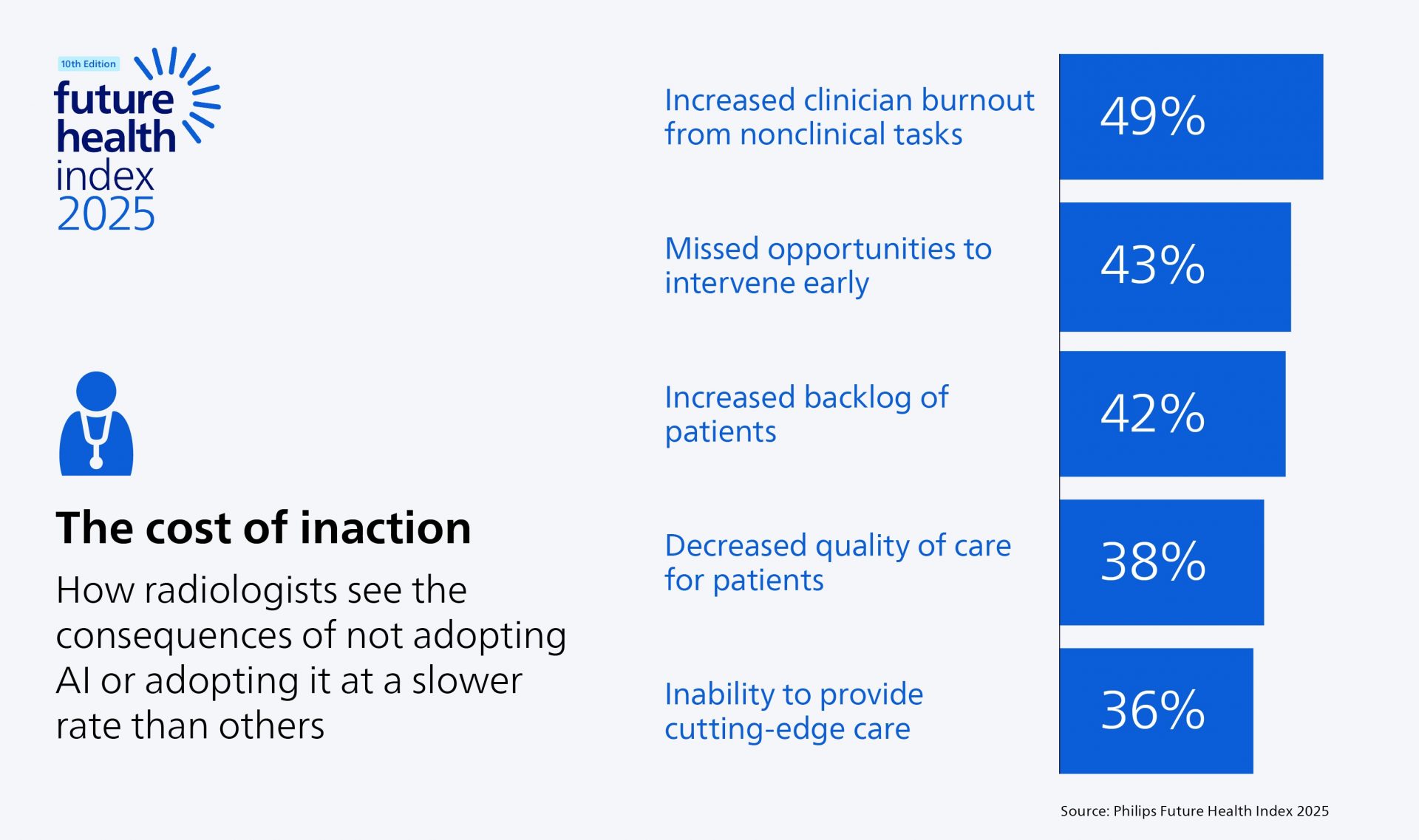 Beyond these implementation challenges, organizations face consequences for slower AI adoption. Here are some of the common hurdles and concerns related to AI-based radiology software:
 Privacy Concerns
Bias in AI
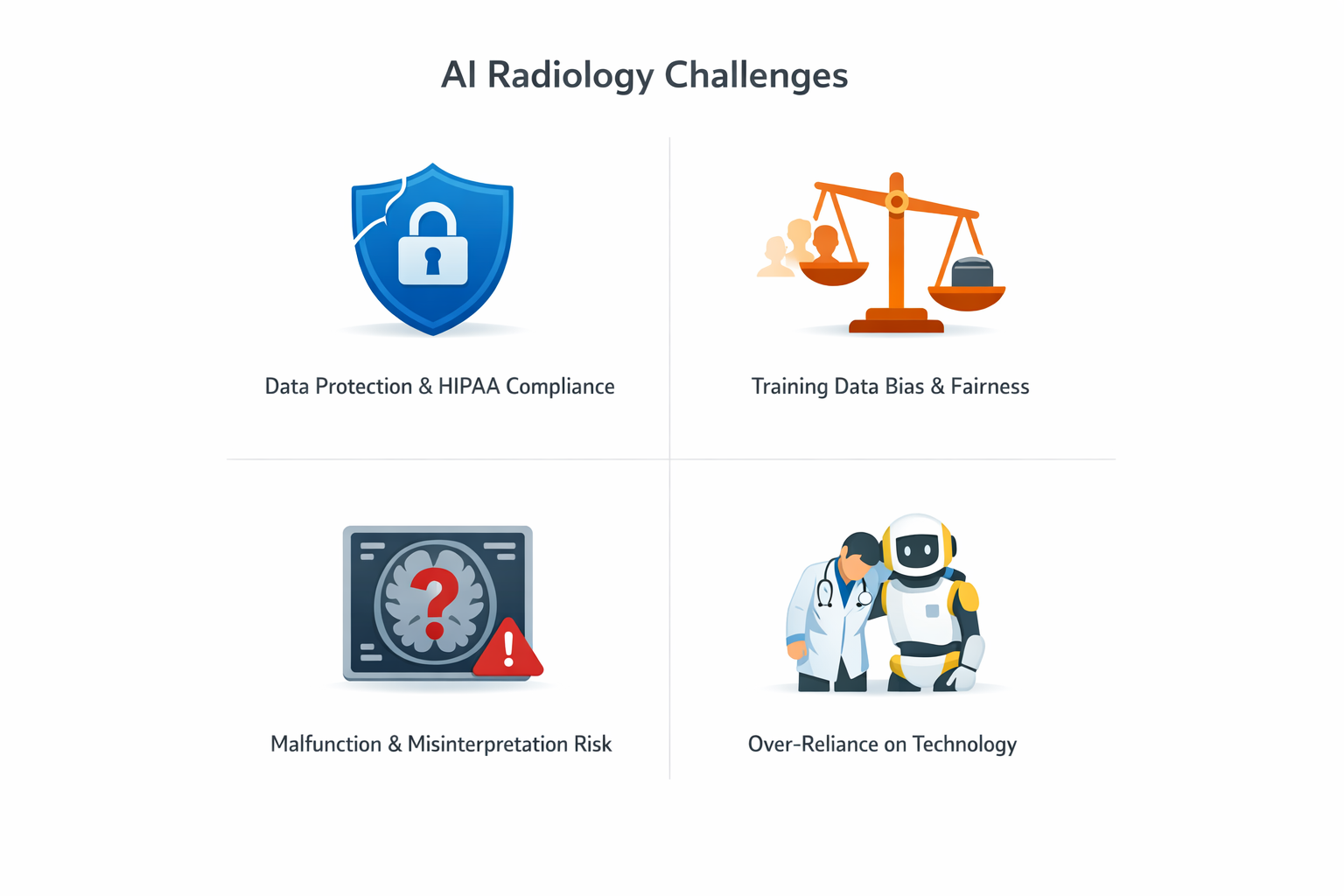
Malfunction or Misinterpretation
Over-Reliance on AI
The Future of AI in Radiology
As we enter 2026, approximately 1,039 FDA-approved AI-enabled radiology devices are already in use – aremarkable milestone that shows how far the field has come. AI is no longer experimental. It’s reshaping radiology practice in three fundamental ways.
AI becomes routine in radiology departments. Rather than a specialized tool, AI will be embedded into everyday workflows. Real-time analysis, automated prioritization, and structured reporting will become standard practice. Organizations without AI integration will struggle to retain clinicians and maintain diagnostic capability.
Radiologists and AI work together. The future is not about AI replacing radiologists. Instead, radiologists and AI form a partnership. Radiologists focus on complex cases, clinical judgment, and patient care. AI handles volume, consistency, and pattern detection. This collaboration delivers better outcomes than either could achieve alone.
Personalized medicine becomes possible. As AI accesses more patient data over time, diagnostic and treatment planning becomes tailored to each individual. Radiology shifts from simply detecting disease to predicting it before symptoms appear.
Move Forward with AI
AI adoption in radiology is accelerating. Organizations that embrace it now will lead in diagnostic quality, clinician retention, and patient outcomes. The question isn’t whether AI will transform radiology, it’s whether your organization will lead or follow. Scopic has proven expertise integrating AI into radiology workflows. We are experienced in advanced radiology and teleradiology software solutions, and we can ensure that AI seamlessly integrates into your radiological practice. Trust Scopic to be your partner in embracing AI’s potential. Schedule your free consultation today.Frequently Asked Questions
Will AI Replace Radiologists?
What Are the Main Applications of AI in Radiology?
How Does AI Improve Diagnostic Accuracy?
What Are the Limitations of AI in Radiology?
How Fast Does AI Analyze Medical Images?
Vibe Coding Whitepaper



 Message Scopio